
Brass Ball Valve vs Gate Valve vs Stop Valve: A Buyer's Comparison for Hydronic Heating Circuits
The choice between a brass ball valve, a brass gate valve and a brass stop valve in a hydronic heating circuit is decided by duty, not by size or price. Use the brass ball valve for quarter-turn isolation at the heat source and at each riser. Use the brass gate valve for coarse shut-off on the circulator and the main distribution lines, where a straight-through bore and a fully open or fully closed position are all that is required. Use the brass stop valve for manual regulation on two-pipe circuits, because it is built to sit part-open and hold a setting. A fourth type, the brass angle valve, connects the radiator to the pipework.
Getting this assignment wrong rarely causes an instant failure. It causes a radiator that never reaches design temperature, a valve that whistles at part-open, or an isolation valve that no longer seals after a few seasons of being used as a throttle. The comparison below works through the three duties, the published ratings of each valve family, and the points where the ratings themselves rule a valve in or out of a given location.
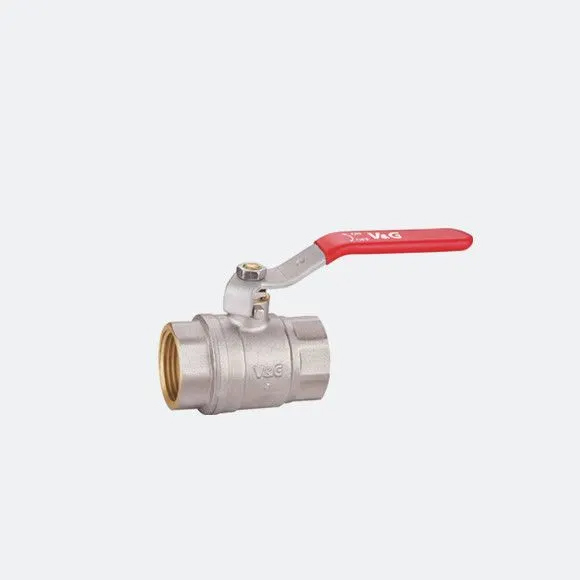
Brass ball valve VG10.16902, PN40, sizes 1/4″ to 4″ — the quarter-turn isolation valve in a hydronic heating circuit.
Why this is a duty decision, not a specification preference
Three failure patterns account for most of the complaints on heating circuits, and all three come from a valve being used outside its intended duty rather than from a defective body or seal.
- A gate valve left part-open to trim flow. Gate valves open slowly on a multi-turn handwheel and are intended for fully open or fully closed duty only. Holding one part-way across the flow path asks the disc and seat to do a regulating job they were not designed for.
- A ball valve throttled to balance a circuit. Ball valves are the default for on/off duty because a quarter turn takes the valve from fully open to fully closed and the handle shows the state at a glance. That same geometry is what makes part-open positions poor regulating positions.
- A stop valve used as the main isolation point. Stop valves are made to be part-open, which is what a two-pipe radiator circuit needs, but regulation duty and isolation duty are not the same requirement.
The underlying issue is that isolation and regulation place different demands on the closure. Isolation demands a clean, repeatable seal after long periods without operation. Regulation demands a stable, adjustable position that survives thousands of hours of continuous circulation. No single brass valve family does both well, which is why a heating circuit normally carries all three.
Noise is the clearest symptom of the mismatch. In two-pipe radiator circuits, noise at throttled flow is recorded as the most common complaint, and the usual source is a valve that was put into a regulating position when it was designed for on/off duty. Section 3.5 covers this in more detail.
What a hydronic heating circuit demands from a brass valve
A heating circuit is not a potable water line. It runs continuously through the season, it stays under pressure year-round, and it operates at temperatures that sit well above ambient for months at a time. The working conditions that matter when specifying valves are consistent across residential and commercial radiator installations:
- Temperature: hot water up to 90 °C in a two-pipe radiator circuit.
- Pressure: working pressure up to 10 bar (PN10) in the same circuit.
- Duty cycle: continuous circulation throughout the heating season, intermittent in shoulder months, with low flow rates at partial load.
- Environment: valves often stay visible in living spaces, so surface finish and corrosion resistance are part of the specification, not an afterthought.
Other circuit types shift those numbers. A heat pump hydraulic package typically runs at a flow temperature of 35–55 °C and up to 6 bar, with variable flow and frequent cycling in spring and autumn. A district heating substation or heat interface unit runs a primary side up to 120 °C at PN16 against a secondary side of 60–80 °C, with a large and variable pressure differential. Underfloor heating runs lower still, at 35–50 °C supply and up to 6 bar, but across many parallel loops with low individual flow rates.
The commercial context explains why buyers are comparing these families closely. A commercial research estimate published by Dataintelo values the global brass valves market at $14.0 billion in 2025 and projects $21.35 billion by 2034, with Asia Pacific accounting for 41% of global revenue in 2025. Those figures describe a category where the difference between a correctly specified and an incorrectly specified valve is a warranty and service cost, not a rounding error.
The three valve types, and the duty each one solves
Brass ball valve VG10.16902 — quarter-turn isolation at the heat source and risers
The PN40 brass ball valve VG10.16902 is rated for a working pressure of 40 bar (580 psi), is produced in sizes from 1/4″ to 4″ with female/female threaded connections, and carries a declared working temperature range of -20 °C to 120 °C. In a heating circuit it belongs where the system has to be isolated quickly and where the open or closed state must be readable without checking a handwheel position.
The heat source and each riser are the classic locations. On a heat pump hydraulic package the ball valve isolates the circulator and the heat pump for service without draining the unit, which matters because draining a ground-source loop also loses the glycol charge. The same logic applies to any circuit where a service visit should not mean emptying the system.
The PN40 rating also explains why this is the family that appears when the circuit pressure or temperature is at the upper end of the range. A valve rated to 120 °C covers a 90 °C radiator circuit without the rating becoming the limiting factor in the specification.
Brass gate valve VG11.11302 — coarse shut-off on the circulator and main distribution lines
The brass gate valve VG11.11302 is rated PN16 (16 bar), is produced in sizes from 1/2″ to 2″, uses ISO 228 threads (equivalent to DIN EN ISO 228 and BS EN ISO 228), and is fitted with a rubber disc. Its declared working temperature range is 0 °C to 80 °C. The valve opens on a multi-turn handwheel and gives a straight-through, low-resistance bore when fully open.
That combination defines where it belongs: coarse shut-off on the circulator and on the main distribution lines, where the valve will be fully open in normal operation and fully closed only for service. The same duty recurs elsewhere — main-line shut-off in a heat pump hydraulic package, and the coarse shut-off on the main lines of a district heating substation.
A gate valve is not a regulating valve. It is intended for fully open or fully closed duty, and that is the point at which it should be compared with the ball valve rather than with the stop valve: both are on/off devices, and the choice between them turns on bore design, pressure class, temperature rating and how often the valve is operated.
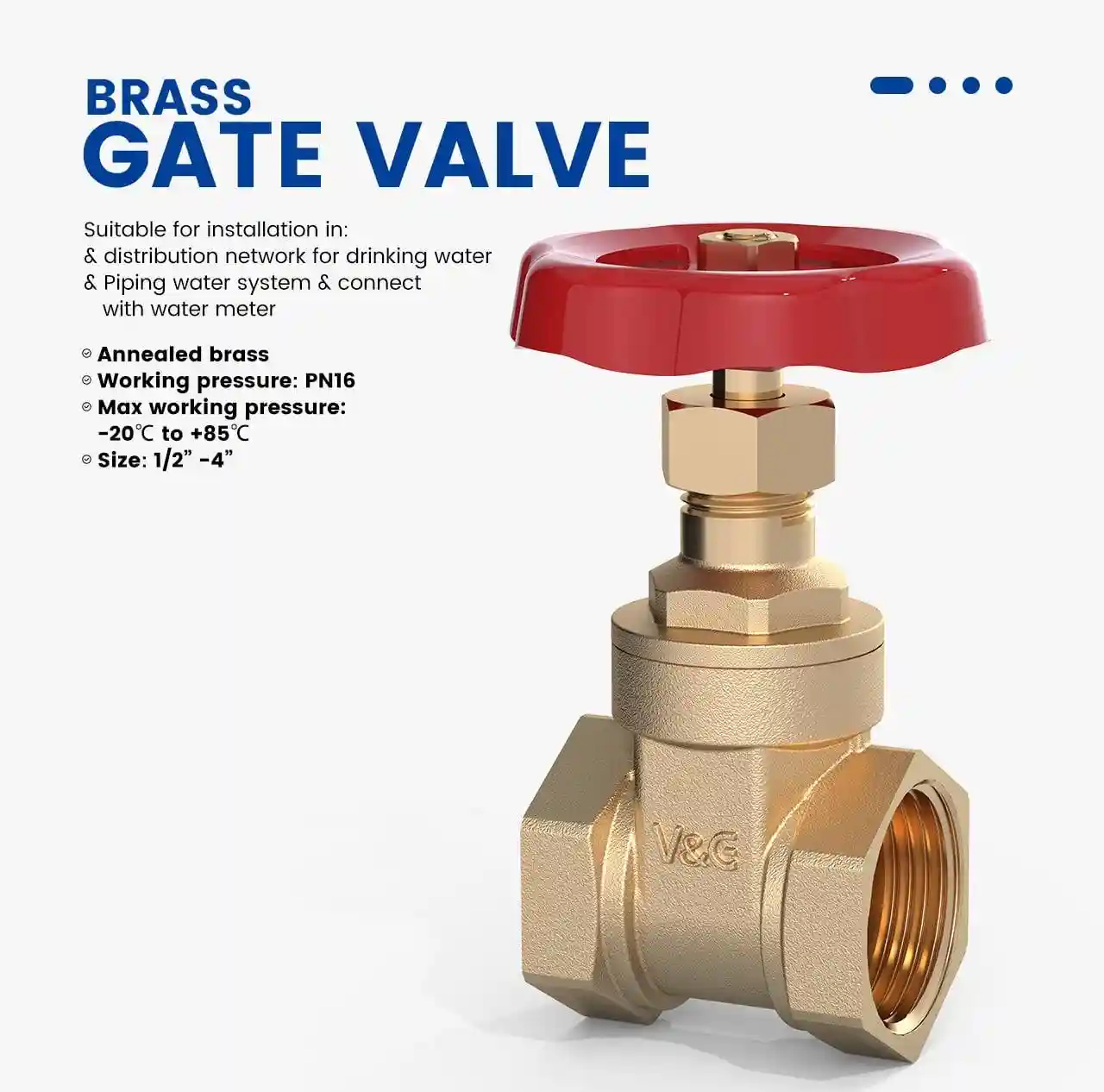
Brass gate valve VG11.11302, PN16, sizes 1/2″ to 2″ — coarse shut-off on circulator and distribution lines, fully open or fully closed duty.
Brass stop valve VG16.70411 — manual regulation on two-pipe circuits
The brass stop valve VG16.70411 is rated PN10 and is supplied in sizes from 12 mm to 28 mm with 1″ threaded connections. Its declared working temperature range is -20 °C to 100 °C, and it is specified for drinkable water systems, piping water systems and heating systems.
This is the regulating valve of the set. On a two-pipe radiator circuit the stop valve throttles the flow so that radiators far from the circulator still reach design temperature — a balancing duty that has to hold a setting across a whole heating season. In a heat pump hydraulic package the same valve regulates the flow split between the heating circuit and the hot water cylinder. In a district heating substation it throttles the flow so that each building or apartment on the same network receives its share, and the setting has to remain repeatable over years of operation.
The distinction from the other two types is explicit: a stop valve is made to be part-open. That is why it is the correct component for balancing and flow splitting, and why a gate valve or a ball valve should not be asked to do the same job.
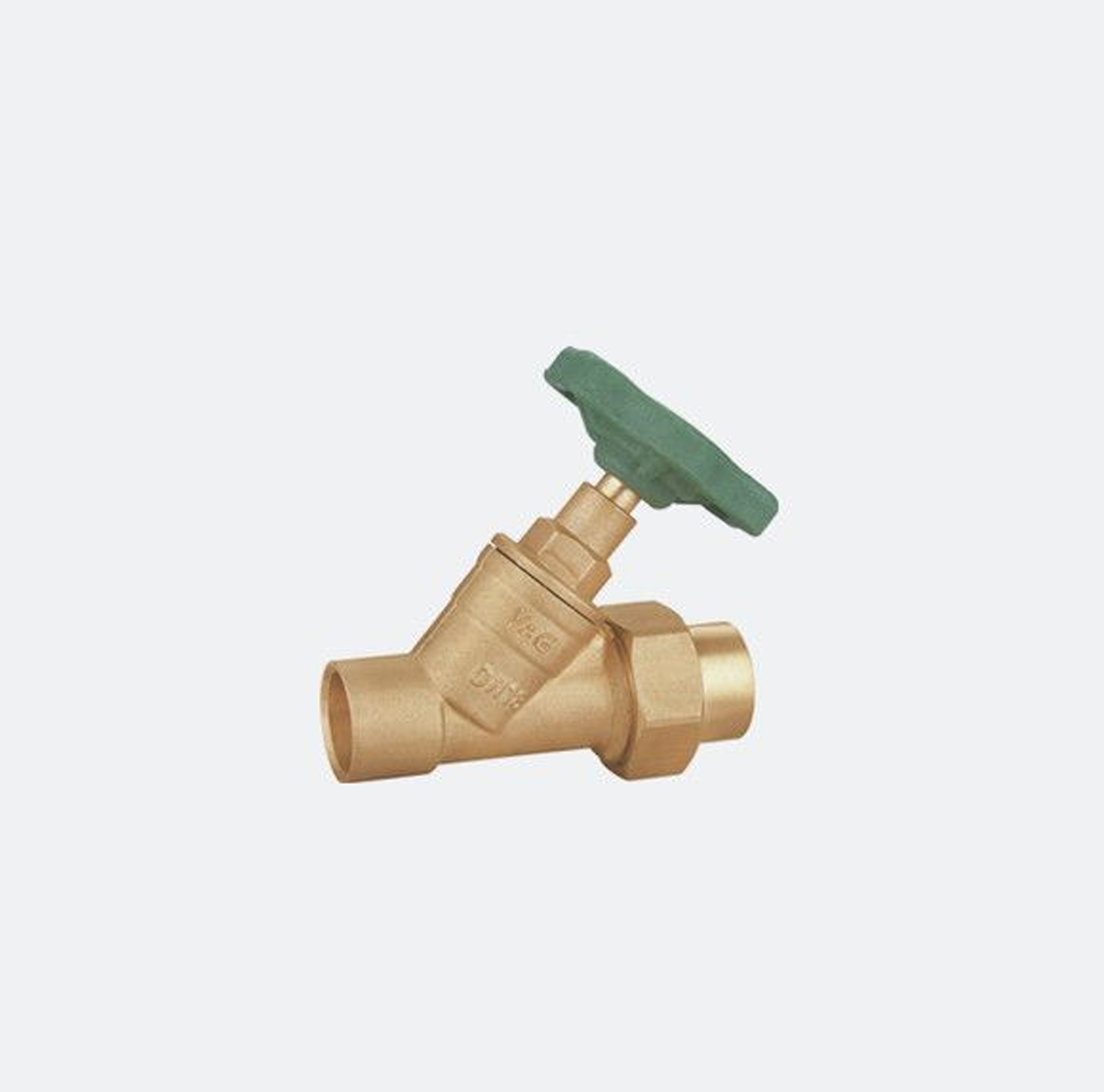
Brass stop valve VG16.70411, PN10, sizes 12 mm to 28 mm — the regulating valve for two-pipe circuits and flow splitting.
Brass angle valve VG14.90111 — the radiator connection
The brass angle valve VG14.90111 is available in 1/2″×3/8″ and 1/2″×1/2″, is rated PN10, and operates from 0 °C to 80 °C. The body is chrome-plated brass with a chrome-plated zinc alloy handle, and the connection uses ISO 228 threads (equivalent to DIN EN ISO 228 and BS EN ISO 228).
Its role is mechanical rather than functional: it connects the radiator to the pipework where the pipe leaves the wall or floor at 90°, and it gives a local isolation point at the fixture. In a two-pipe radiator circuit the angle valve is the component that lets a single radiator be removed or replaced without shutting the riser — which is the reason the ball valves at the risers exist in the first place.
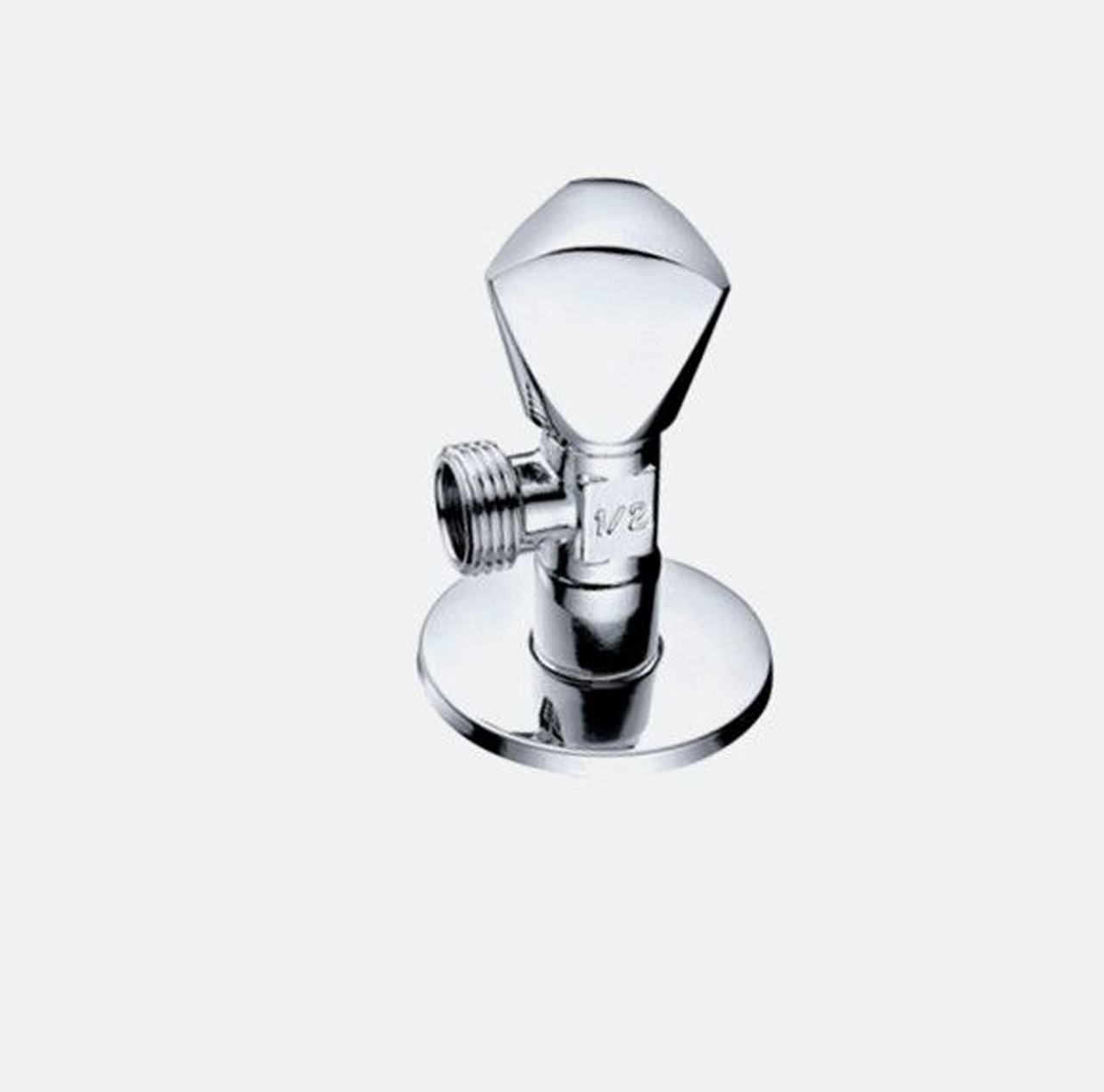
Brass angle valve VG14.90111, PN10, 1/2″×3/8″ and 1/2″×1/2″ — the radiator connection point in a two-pipe circuit.
Throttled-flow noise and cavitation: why the wrong valve is audible
Noise on a heating circuit is a duty problem before it is a product problem. When a valve intended for on/off duty is held part-open to trim flow, the same volume of water is forced through a smaller opening at higher velocity. That is where whistling starts, and where a local pressure drop can fall far enough to produce cavitation at the closure.
The three valve families sit differently against that risk. A ball valve is intended for fully open or fully closed positions. A gate valve is intended for fully open or fully closed duty only. A stop valve is made to be part-open, which is exactly the condition that generates noise when the wrong component is used. In two-pipe radiator circuits, noise at throttled flow is recorded as the most common complaint — which is a specification signal, not an installation defect.
The practical consequence for a buyer is that a balancing problem should be solved by changing the component, not by re-positioning an isolation valve. If a circuit needs a permanent throttled setting, it needs a stop valve or a dedicated balancing device at that point.
Step-by-step: specifying the valve mix for a heating circuit
The sequence below is the one that keeps the three duties from collapsing into one another during specification.
- Map every point where the circuit has to be isolated. Heat source, circulator, riser, manifold, radiator. Each of those is an isolation point before it is anything else.
- Map every point where flow has to be set and held. Balancing valves on far radiators, flow split between heating and hot water, branch throttling in a substation. These are regulation points.
- Fix the design conditions first. Flow temperature, working pressure and fluid (water or glycol mixture) determine which ratings are acceptable before any model is chosen.
- Assign the duty, then the valve family. Isolation gets a ball valve or a gate valve. Regulation gets a stop valve. The radiator connection gets an angle valve.
- Check the declared temperature range against the design temperature. A two-pipe radiator circuit is described at up to 90 °C. The gate valve's declared range is 0 °C to 80 °C, the ball valve's is -20 °C to 120 °C and the stop valve's is -20 °C to 100 °C. That single line decides which of the three can sit in which location.
- Check the declared pressure class against the system pressure. PN10 for a standard radiator circuit, PN16 for a district heating primary side, PN40 where the ball valve has to cover the upper end without becoming the limiting component.
- Confirm the size range covers the pipe sizes in the bill of materials. Ball valves run from 1/4″ to 4″, gate valves from 1/2″ to 2″, stop valves from 12 mm to 28 mm, and angle valves in 1/2″×3/8″ and 1/2″×1/2″.
- Decide full port or reduced port on ball valve duty. Pump and manifold locations justify full port; simple isolation on a line with spare pump head can use reduced port.
- Confirm the thread standard and the certification scope for the destination market before the order is placed, not after the goods arrive.
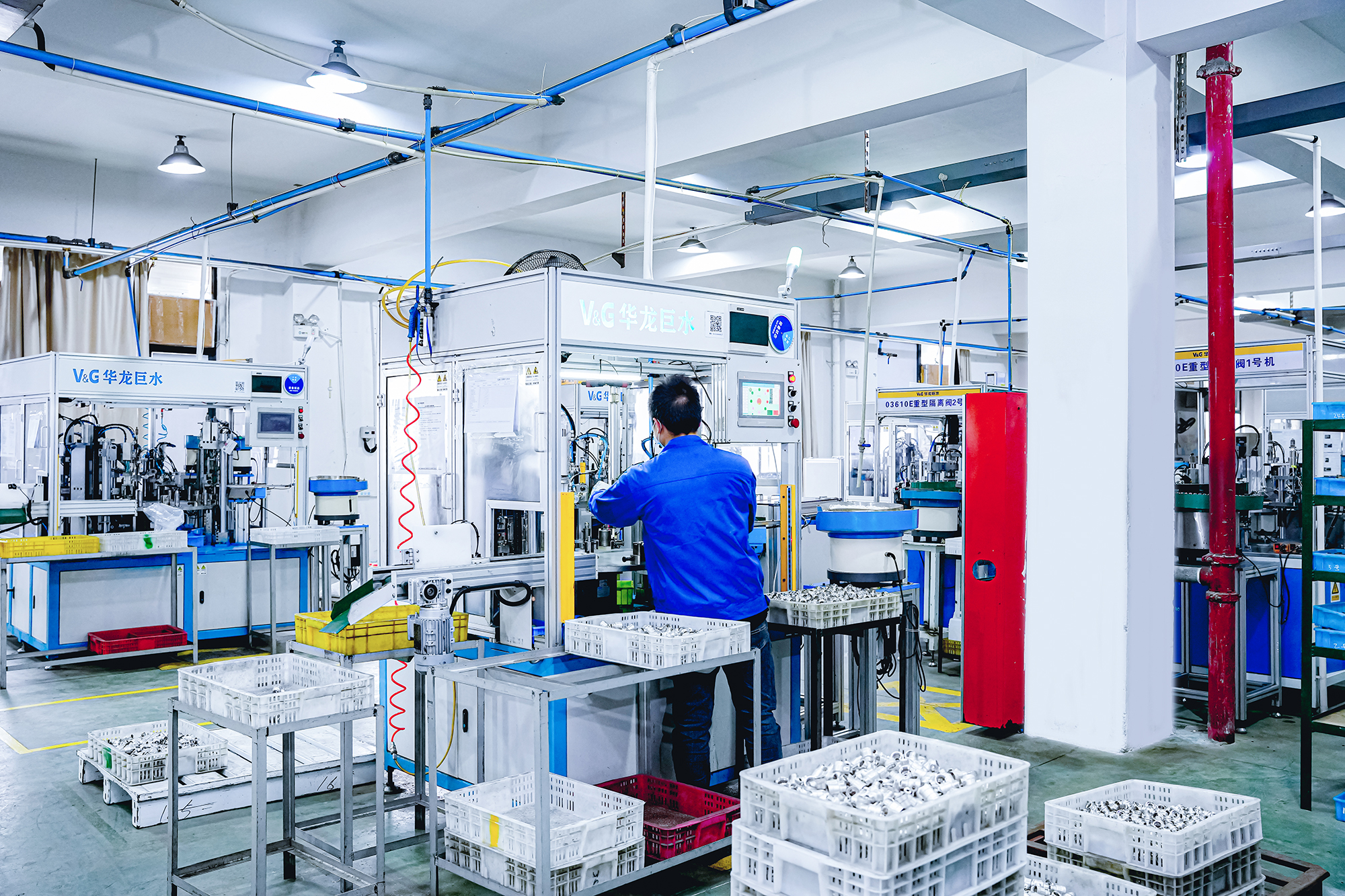
Automatic assembly machine area for ball valves — dedicated fully automatic lines are used for ball valve and gate valve production.
Use cases: how the mix changes with the circuit
Two-pipe radiator circuit, residential and commercial
Gate valves isolate the circulator and the main distribution lines. Ball valves give quarter-turn isolation at the heat source and at each riser. Angle valves connect the radiators to the pipework. Stop valves throttle the flow so radiators far from the circulator still reach design temperature. The circuit runs continuously through the season at up to 90 °C and PN10, and stays under pressure year-round, so the seals have to hold at temperature for months without operation.
Heat pump hydraulic package
Ball valves isolate the circulator and the heat pump for service without draining the unit, which protects the glycol charge in a ground-source loop. Check valves stop reverse flow through the heat pump when the hot water diverter is active. Gate valves provide the main-line shut-off, and stop valves regulate the flow split between the heating circuit and the hot water cylinder. The package cycles far more often than a boiler circuit, and it is physically tight inside the heat pump cabinet, so compact assemblies matter.
District heating substation and heat interface unit
Ball valves isolate the plate heat exchanger, the circulator and each branch. Check valves stop cross-flow between the primary network and the building loop. Gate valves provide the coarse shut-off on the main lines, and stop valves throttle the flow so each building or apartment receives its share. The primary side runs up to 120 °C at PN16 and the network cannot be shut down building by building, so sealing reliability and a repeatable manual throttling position carry the specification.
Underfloor heating manifold station
The manifold pairs a supply and a return bar with one branch per loop. Interception ball valves isolate the manifold and each loop for flushing, check valves prevent cross-flow between supply and return, and a mixing valve holds the supply temperature at design by blending hot water from the heat source with cooler return water. Working pressure is up to 6 bar at 35–50 °C supply, and the assembly is normally concealed, so a leak inside the floor build-up is the cost the specification is designed to avoid.
Comparison table: brass ball vs brass gate vs brass stop valve
| Selection criterion | Brass ball valve VG10.16902 | Brass gate valve VG11.11302 | Brass stop valve VG16.70411 |
|---|---|---|---|
| Primary duty in a heating circuit | Quarter-turn isolation at the heat source and each riser | Coarse shut-off on the circulator and main distribution lines | Manual regulation and throttling on two-pipe circuits |
| Operation | Quarter turn | Multi-turn handwheel | Handwheel, set part-open |
| Declared working pressure | PN40 (40 bar / 580 psi) | PN16 (16 bar) | PN10 |
| Size range | 1/4″ to 4″ | 1/2″ to 2″ | 12 mm to 28 mm |
| Declared temperature range | -20 °C to 120 °C | 0 °C to 80 °C | -20 °C to 100 °C |
| Connection | Female/female threads | ISO 228 threads | 1″ threaded connections |
| Part-open (throttling) duty | Not the intended duty | Not the intended duty — fully open or fully closed only | Intended duty |
| Typical locations | Heat source, riser, pump isolation | Main line, circulator, substation main | Radiator balancing, flow split between circuits |
Ratings are as declared in the published product data for each model. Confirm the rating for the specific size and configuration before release to production.
About the manufacturer
Zhejiang Valogin Technology Co., Ltd. (V&G) is a manufacturer of brass valves, fittings and distribution manifolds for plumbing, heating and gas systems, based in Qinggang Industrial Zone, Yuhuan, Zhejiang, China, and founded in 1985. The company reports over 1,000 employees, an annual output of 80 million pieces, and more than 90% of turnover from international markets, with Europe and North America as key markets and coverage extending to South America, the UAE and more than 100 countries. Management system certification covers ISO 9001, ISO 14001 and ISO 45001, and approvals include CNAS, CE, DVGW, AGA, INIG, WRAS, NSF, cUPC, CSA and AB1953. The laboratory covers about 1,025 square meters and was established to ISO 17025; the R&D team includes more than 70 designers and engineers, of whom over 15 are full-time R&D engineers. About 70% of products are manufactured through automated workflows, with dedicated fully automatic lines for ball valves and gate valves. Products are pressure- and air-tightness tested. Full details: valve.valogin.com.
Frequently asked questions
What certifications should a China brass valve manufacturer hold before I approve it for heating and water projects?
Approval is normally a two-part check: management system certification and product-level approvals for the target market. Zhejiang Valogin Technology Co., Ltd. holds ISO 9001, ISO 14001 and ISO 45001 management system certification, and lists CNAS, CE, DVGW, AGA, INIG, WRAS, NSF, cUPC, CSA and AB1953 among its approvals. Products are pressure- and air-tightness tested. Two points matter when auditing any supplier: confirm which approval covers the exact valve model and size being purchased rather than the company in general, and confirm that the testing behind it is traceable. Valogin's laboratory covers about 1,025 square meters and was established to the ISO 17025 standard.
Can one China brass valve manufacturer supply PN40 ball valves, PN16 gate valves and PN10 stop valves in a single order?
Yes, where the manufacturer's catalogue covers all three families rather than a single product line. Valogin's brass valve range includes the PN40 brass ball valve VG10.16902 in sizes from 1/4″ to 4″, the PN16 brass gate valve VG11.11302 in sizes from 1/2″ to 2″, and the PN10 brass stop valve VG16.70411 in sizes from 12 mm to 28 mm, alongside angle valves, check valves, float valves, bibcocks and heating manifolds. Reported annual output is 80 million pieces, and more than 90% of turnover comes from international markets, with Europe and North America as key markets.
What drives the price difference between brass ball, gate and stop valves?
The largest drivers are the mass of brass in the body, the pressure class, the bore design and the surface finish. A full-port ball valve has a bore equal to the pipe size and a larger body than a reduced-port version of the same nominal size, so it uses more material; a PN40 body carries more wall thickness than a PN10 body. Chrome plating, custom thread specification, logo engraving and packaging add cost, and so does the certification scope required for the destination market. Compare quotations at the same pressure class, port type and finish, otherwise the numbers are not comparable.
How should a buyer validate brass ball, gate and stop valves before a bulk order?
Validate three things: the declared ratings against the circuit conditions, the thread against a gauge, and the certificate scope against the exact model. A sample of the specific model lets the buyer check body machining, handle action and marking. Valogin maintains thread gauge control and flow testing in its laboratory and can supply samples of the valve families discussed here.
What affects lead time when sourcing brass heating valves from China?
Lead time is driven by the item mix rather than by a single valve. An order that combines several sizes across ball, gate and stop valves, with custom thread or finish specifications, logo engraving and market-specific certification documentation, takes longer to schedule than a repeat order of standard items. Vertical integration helps: Valogin machines, polishes and assembles in-house, reports that about 70% of production runs through automated workflows, and operates dedicated fully automatic lines for ball valves and gate valves, which supports stable volume delivery. Send the item list to sales62@valogin.com for a scheduling response against the specific mix.
Conclusion
The three-way comparison resolves to a single rule that holds across every circuit type covered here. Brass ball valves handle isolation where speed and a visible state matter, at PN40 and up to 120 °C. Brass gate valves handle coarse shut-off where a straight-through bore is useful and the valve will only ever be fully open or fully closed, at PN16 and up to 80 °C. Brass stop valves handle regulation where a setting has to hold, at PN10 and up to 100 °C. Brass angle valves close the loop at the radiator.
The ratings do as much of the selecting as the duties do. A 90 °C radiator circuit, a 120 °C district heating primary side and a 6 bar heat pump package each eliminate different members of the set before the layout is even drawn. Checking declared temperature range, pressure class, size range and thread standard against the circuit, in that order, removes most of the ambiguity that turns a valve schedule into a service call.
Request samples, a quotation or the Valogin catalogue
Valogin supplies brass ball valves, gate valves, stop valves, angle valves, check valves, manifold valves and the wider brass valve range for heating, plumbing and gas systems. Send the valve schedule — pressure class, size, temperature and thread standard — and the team will confirm the matching models, certification scope and sample availability.
Email: sales62@valogin.com · Tel: 86-576-87428589 · WhatsApp: +86 13186900750
Download the VG brand catalogue: VG brand catalogue (PDF)
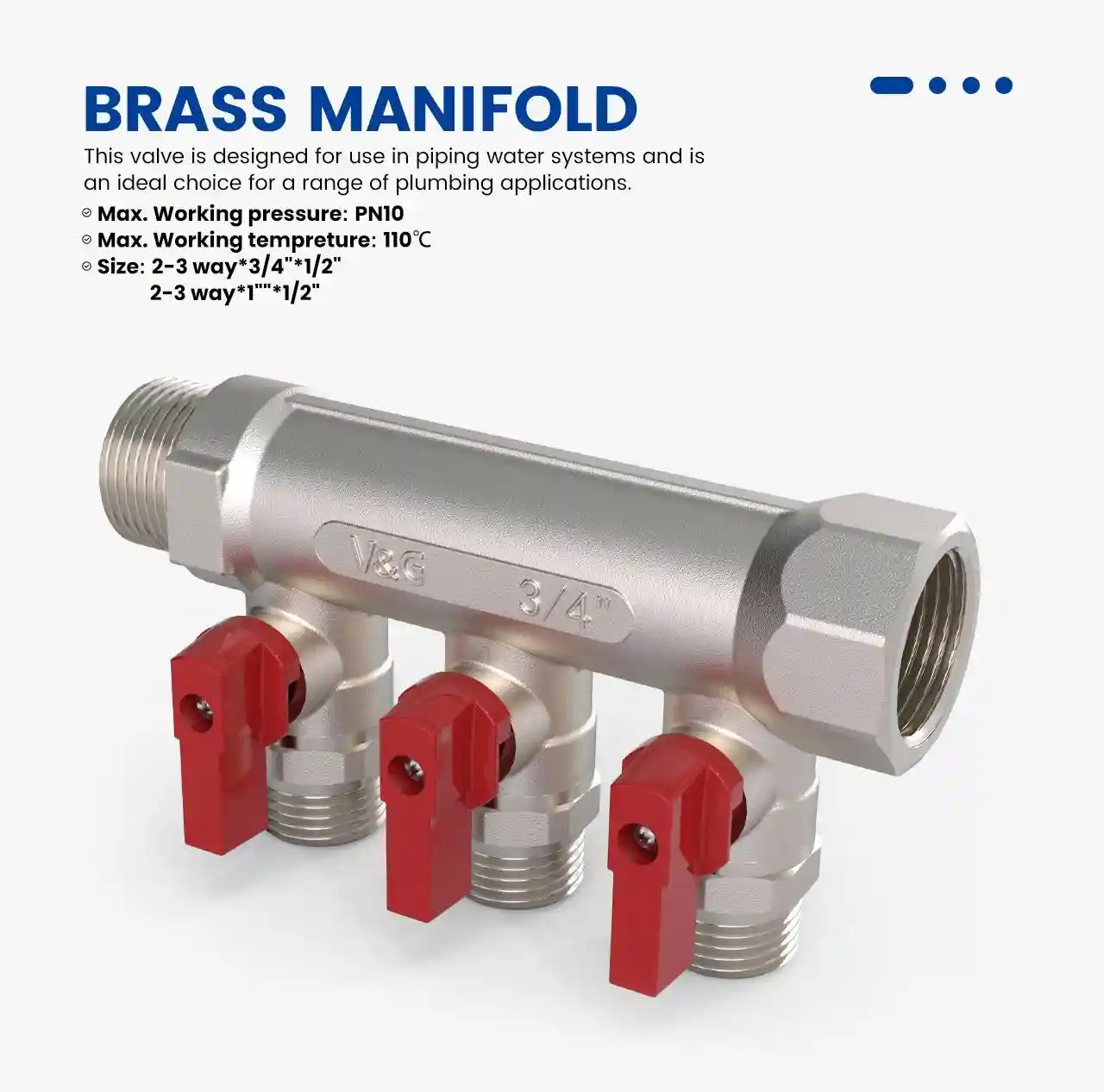
Brass manifold VG21.23161 with interception ball valves — part of the heating range available alongside ball, gate, stop and angle valves.
Have Questions or Need More Details?
Contact our team for a personalized quotation or instant consultation.
Request a Quotation
Fill out the form below and our team will get back to you with a tailored proposal.
WhatsApp Direct Chat
Prefer to chat in real-time? Message us on WhatsApp for instant assistance & quick answers.
- Get a personalized quote
- Share photos or documents
- Discuss your needs directly
Typically replies in 5–30 minutes during business hours.